A Joke, A Threat, And A Very Online Meltdown Trevor Noah delivered a measured, globally tuned monologue while hosting the 2026 Grammy Awards. Donald…
A second ‘mini moon’ has been orbiting Earth and we only just noticed it

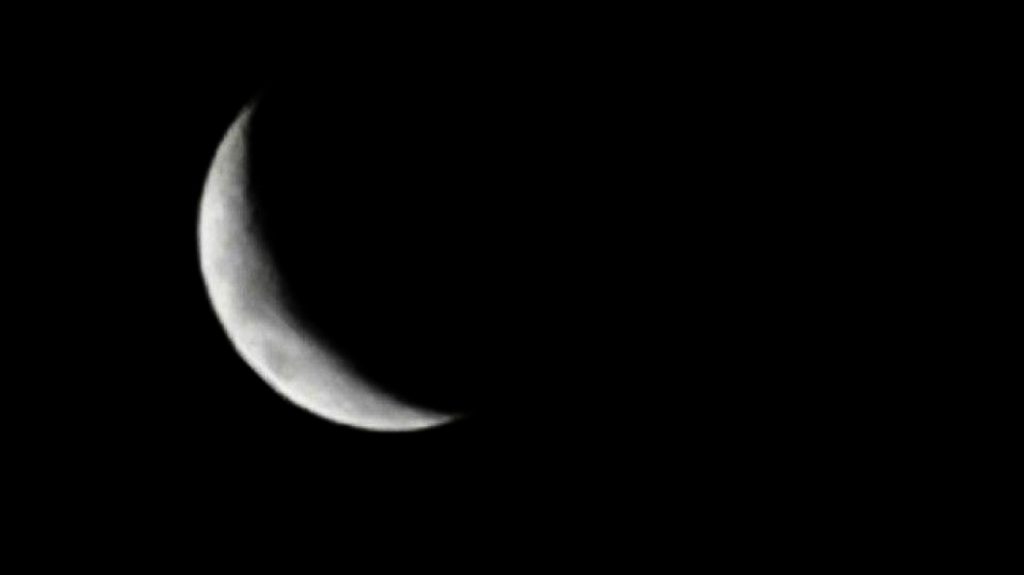
Don’t look now — because you won’t be able to see it — but planet Earth has caught itself a new mini moon.
Discovered by a team of Arizona-based astronomers — Kacper Wierzchos and Theodore Pruyne — the mini moon is an asteroid that has been captured and brought under temporary control by Earth’s gravitational force.
https://twitter.com/WierzchosKacper/status/1232460436634656769
It’s so small, in fact, that a family car could find it tricky parallel parking on its surface.
Astronomers believe the temporary moon, called 2020 CD3, has likely been orbiting Earth for the past three years, but will likely wriggle itself free from Earth’s confines by April.
That’s largely due to its unstable orbit (below tweet) as its pulled from various angles by the Earth and Sun.
Earth may have a new minimoon. C26FED2 may have spent the last 3 years orbiting Earth after being captured through L1. This simulation is in a rotating frame which keeps L1 and L2 stationary. Read @BadAstronomer's blog on minimoons. https://t.co/EqhmCf1Flhhttps://t.co/dAQHbA3skC pic.twitter.com/3NHqNKdTe3
— Tony Dunn (@tony873004) February 16, 2020
https://twitter.com/WierzchosKacper/status/1232461053692268545
Surely every roller coaster wishes that it was #2020CD3! Too bad it is leaving us in 2020, maybe scared off by the coronavirus?
JPL Horizons- Rec #:50402717 (+COV) https://t.co/M3bHLb7BW0: 2020-Feb-25_15:42:26 # obs: 52 (6 days) pic.twitter.com/Ex1sisJJvt— Pyritohedral hypergon in blue and gold (@Tom_Ruen) February 26, 2020
2020 CD3 may be small, but it’s significant for astronomers. Only one other asteroid has been known to fall into Earth’s gentle but temporary grasp.
Dubbed 2006 RH120, Earth’s previous temporary moon is now enjoying a solar orbit, but fell into the clutches of Earth’s gravitational pull as recently as 2017.
The phenomenon is common across the Solar System too. Larger planets, like Jupiter, Saturn and Neptune, have “irregular satellites” — moons that have been captured by their host planet and enter stable orbits.
Feature image: Andy Walker/Memeburn